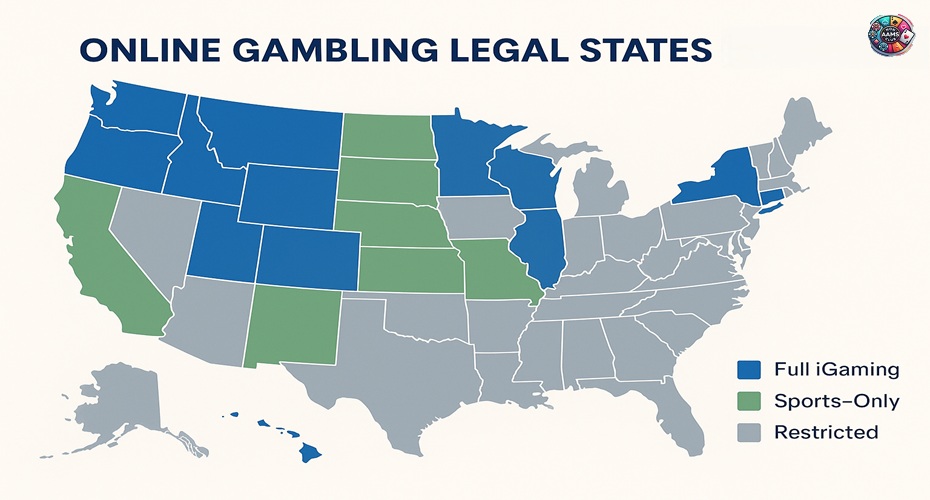
Understanding online gambling legal states USA 2025 is essential for anyone who wants to know where online casinos, poker platforms, and sports betting are actually permitted in the United States.
Unlike many European markets, the U.S. doesn’t operate under a single nationwide gambling framework. Each state defines its own rules, licensing requirements, tax rates, and approved operators—meaning the legality of online gambling depends entirely on where a player is physically located.
So if you’re a player, operator, affiliate, or simply curious about how the U.S. market actually works, this guide breaks down:
-
Which states currently allow online gambling
-
Where only sports betting is legal (but not online casinos)
-
Which states ban gambling entirely
-
How tribal agreements and lotteries shape digital gaming
-
Why some “legal” states still have restricted or limited markets
We’ll also explain how things are trending in 2025 and why Sportaza has become a familiar name for players outside U.S. state-regulated markets looking for solid global platforms.
Quick Context: Why the U.S. Gambling Market Works This Way
Let’s keep it simple.
In 2018, the U.S. Supreme Court struck down PASPA (the Professional and Amateur Sports Protection Act). Before that, states could not legalize sports betting on their own. Once PASPA fell, each state received the authority to decide:
-
Whether to legalize sports betting
-
Whether to legalize online casinos
-
Whether to allow poker or lottery online
-
And how operators can get licenses
Some states moved fast. Others didn’t touch anything. Some legalized sports betting but not online casinos. Others allowed casinos but locked access behind tribal agreements.
This creates a patchwork instead of a unified national market.
Think of it like 50 different mini-countries sharing one flag.
The Legal Landscape in 2025 at a Glance
Here is what matters most when discussing online gambling legal states USA 2025:
| Type of Online Gambling | States Allowing It (Approx.) | Notes |
|---|---|---|
| Online Sports Betting | ~ 30+ states | The most widely legalized gambling form |
| Online Casinos (Slots/Table Games) | 7–8 states | Limited and tightly regulated |
| Online Poker | 5 states | Often shared liquidity is restricted |
| iLottery | 10+ states | Often state-monopoly structures |
| Daily Fantasy Sports (DFS) | Most states allow it | Regulatory classification varies |
So while many states feel like they have online gambling, the definition of “legal” changes state-by-state.
This guide focuses on the states that matter most for operators and players and highlights where real online casino gaming is actually possible, not just retail or kiosk betting.
States Fully Allowing Online Casinos + Sports Betting (2025)
These are the most open and operator-friendly states, where digital gambling is legal, licensed, and commercially structured:
-
New Jersey
-
Pennsylvania
-
Michigan
-
Connecticut
-
West Virginia
-
Delaware (lottery-run model)
-
Rhode Island (single-operator model)
These states are often referred to as the “full iGaming jurisdictions” because they allow:
-
Online casinos (slots and tables)
-
Online poker (with some liquidity-sharing agreements)
-
Online sportsbooks
-
State lotteries (online or hybrid distribution)
They also offer remote account registration, meaning players can sign up from home, not in person.
If you’re an operator entering the U.S. for the first time, these states are the strategic launchpad.
States Allowing Online Sports Betting Only
Many states legalized online sports betting but not casino gaming.
Examples include:
-
Arizona
-
Colorado
-
New York
-
Illinois
-
Maryland
-
Louisiana
-
Kansas
-
Ohio
-
Wyoming
-
Tennessee (online-only sports betting)
These markets are massive, but competition is intense and marketing costs are high.
Sports betting-only states are often first step markets for U.S. growth strategies.
States With No Online Gambling (or Severe Restrictions)
Some states have outright prohibitions or no regulation in place:
-
Utah
-
Hawaii
-
Idaho
-
South Carolina
-
Texas (still only state lottery online)
These states are unlikely to legalize online gambling soon for cultural, political, or tribal sovereignty reasons.
Where Does Sportaza Fit Into This?
Sportaza is a global online casino and sportsbook platform available to players in regions where international online gambling is permitted. Unlike U.S. state-regulated operators, Sportaza operates under international licensing frameworks, which makes it relevant for:
-
Players outside U.S. regulated states
-
Travelers who want uninterrupted access
-
Users who prefer cross-game wallets (casino, live tables, sports, mini-games)
-
Players who want broader payment methods, including crypto
If you are located inside a U.S. state that regulates online gambling, you must follow state law and use state-approved operators.
If you are located outside U.S. controlled gambling jurisdictions, Sportaza is one of the leading options for full-stack gaming.
Check local laws where you live. Availability is always jurisdiction-dependent.
Reader Rating
★
★
★
★
Rate this guide to help other players 👇
Ready to Play Online? Sportaza Offers Casino, Sports, Live Tables & More.
State-by-State Deep Dive (Full iGaming States)
New Jersey
The New Jersey online gambling market remains one of the most mature and competitive in the U.S. With full access to online casinos, poker, and sports betting, New Jersey is often seen as the training ground for operators building a long-term U.S. presence.
Why It Matters:
-
Allows multi-skin operator access (multiple brands under each casino license)
-
Strong affiliate ecosystem + marketing-friendly environment
-
Shared liquidity poker through MSIGA
Challenges:
-
Very competitive
-
Marketing expensive during NFL/NBA cycles
-
Recent tax pressure on GGR
Regulator: New Jersey Division of Gaming Enforcement (DGE)
If you want to understand “how U.S. online gambling works,” New Jersey is the blueprint.
Pennsylvania
Pennsylvania is one of the largest online betting markets in the country, especially for sports.
Online casinos, poker, and sportsbooks are available, but operators face a 36% GGR tax on sports betting, which means promo burn rates must be controlled carefully.
Strengths:
-
Remote signup allowed
-
Huge sports audience
-
Well-defined compliance structure
Limits:
-
Market crowded
-
High taxation impacts profitability
Regulator: Pennsylvania Gaming Control Board (PGCB)
Michigan
Michigan offers one of the most balanced regulatory environments for online casinos + sports betting + poker.
Why Operators Like It:
-
Tax rates are reasonable
-
Full cross-product wallet = higher lifetime value
-
Strong year-round sports engagement
Constraints:
-
Only one casino-skin per license
-
Tribal + commercial partnership alignment required
Regulator: Michigan Gaming Control Board (MGCB)
Connecticut
Connecticut is a limited-license market where online casinos and sportsbooks are operated by two tribal groups and the state lottery.
Pros:
-
Predictable regulation
-
High trust among local players
Cons:
-
Closed access for new direct-to-consumer brands
-
Population smaller than top-tier markets
Regulator: Connecticut Department of Consumer Protection (DCP)
West Virginia
West Virginia is one of the most straightforward states for operating full online gambling platforms. It allows:
-
Online casinos
-
Online sportsbooks
-
Online poker
-
Remote registration
-
Up to 3 online skins per land-based casino
This flexibility makes the state useful for brand strategy testing, segmentation, and product iteration without the intense marketing arms race seen in New Jersey or Pennsylvania.
Strengths:
-
Low sports betting tax (10% GGR)
-
Online casino revenues are consistent and sticky
-
Operators can launch faster than in most states
Challenges:
-
Small population
-
Fewer professional sports teams = digital-first acquisition
Regulator: West Virginia Lottery Commission
Think of West Virginia as a quiet but efficient sandbox for long-term players.
Delaware
Delaware was one of the first states to legalize online casinos (2013).
However, the state uses a lottery-controlled, single-operator model, currently powered by Rush Street Interactive (BetRivers).
Meaning:
-
No open commercial licensing
-
No independent casino brand access
-
The state controls platform + offering
This market is stable, but closed to new operators unless legislation changes.
Regulator: Delaware Lottery
Who Delaware is for:
-
B2B suppliers
-
Payment providers
-
Compliance + monitoring vendors
Not ideal for new casino brands targeting U.S. B2C growth.
Rhode Island
Rhode Island’s model is similar: a state-lottery-run sportsbook and iGaming operation in partnership with Bally’s.
Key Characteristics:
-
Single app statewide
-
Remote sign-up allowed
-
Smaller player population → conversion must be efficient
The market rewards clean UX, fast onboarding, and loyalty-driven retention, not media spectacle.
Regulator: Rhode Island Lottery (State Lottery Division)
This is a performance market, not a brand-awareness market.
States With Online Sports Betting Only (No Online Casinos)
These states allow online sportsbooks, but do not allow digital slot/table casino gaming:
| State | Notes |
|---|---|
| New York | High-volume sports market; high taxes on sports GGR |
| Illinois | Strong urban sports fanbase; retail partnerships required |
| Arizona | Mixed tribal + commercial licensing model |
| Maryland | Many licensed online sportsbooks; casinos offline only |
| Louisiana | Parish-by-parish legalization system |
| Kansas | Lottery-owned casinos manage sportsbook skins |
| Ohio | Open market; multiple operator classes |
| Wyoming | Online-only sportsbook market (no retail casinos) |
| Tennessee | Online sports betting only, no physical casinos at all |
| Colorado | Very open market, multiple operator partnerships |
These states tend to be sports-first ecosystems.
Good for:
-
Brand visibility
-
Sponsorships
-
Betting volume tied to NFL, NBA, MLB, NCAA
But less attractive for operators seeking higher-margin casino revenue.
Not in a U.S. regulated gambling state? Sportaza offers full casino, live games & sportsbook access.
States With No Legal Online Gambling
These states maintain full or near-full online gambling prohibitions:
| State | Status |
|---|---|
| Utah | Explicit constitutional ban |
| Hawaii | No casinos, no sportsbooks, zero authorization |
| Texas | Lottery only, strong political resistance |
| Idaho | No online gambling framework |
| South Carolina | Lottery only, no online license structures |
These states are influenced by:
-
Religious/cultural stances
-
Strong tribal gaming structures
-
Limited legislative appetite
-
Political cost of change
Short-term legalization probability: Low.
Long-term: Texas could shift eventually — but not soon.
Market Direction Going Into 2026
Three strong trends are emerging:
-
States are increasingly open to online casinos because they generate more stable tax revenue compared to sportsbooks.
-
Shared-liquidity poker (MSIGA) may expand if California or New York ever legalize online poker.
-
Crypto-friendly global platforms (like Sportaza) continue to gain traction outside U.S. regulatory zones, due to flexibility and cross-product wallets.
In other words:
-
More regulation is coming
-
More states will legalize online casino play
-
Competition will grow, especially in mature states
The U.S. market is not slowing down.
It’s evolving — and accelerating.
Conclusion
The online gambling landscape in the United States in 2025 is a patchwork of state-level laws, licensing systems, and operational models. Some states offer full access to online casinos, poker, and sportsbooks. Others only allow sports betting, and a handful still block all forms of online gambling.
For players inside regulated U.S. states, the options available are determined strictly by geolocation and state-approved operators. For players outside these jurisdictions, or for users in countries where international iGaming is allowed, platforms like Sportaza provide a complete gaming experience that includes casino, live tables, mini-games, and a full sportsbook under international licensing frameworks.
The direction of the U.S. market is clear:
-
More states are moving toward online casino regulation
-
Shared liquidity poker is gaining renewed interest
-
Cross-product platforms are outperforming single-vertical brands
-
Retention and UX now matter more than promo burn
Understanding where the U.S. is today means being prepared for where the market will be tomorrow.
Looking for a full online casino & sportsbook experience outside U.S. regulated states?
FAQ
Is online gambling legal in the United States in 2025?
Yes, but it depends on the state. Gambling legality is determined on a state-by-state basis. Some states allow full online casinos, others permit only sports betting, and some prohibit online gambling entirely.
Which U.S. states allow online casinos in 2025?
The primary states allowing online casino gambling include:
New Jersey, Pennsylvania, Michigan, West Virginia, Connecticut, Delaware, and Rhode Island.
Can I use Sportaza inside the United States?
If you are physically located in a U.S. state that regulates online gambling, you must use state-authorized platforms. If you are outside U.S. gambling-regulated jurisdictions, Sportaza is available where international online gambling is permitted. Always check local laws.
Why do some states allow sports betting but not online casinos?
Sports betting produces fast tax revenue and is easier to regulate, while online casino gaming is politically sensitive and has higher regulatory complexity.
Will more U.S. states legalize online casinos soon?
Yes. The economic incentive for stable, recurring state tax revenue is pushing lawmakers toward expanding full iGaming legalization.